
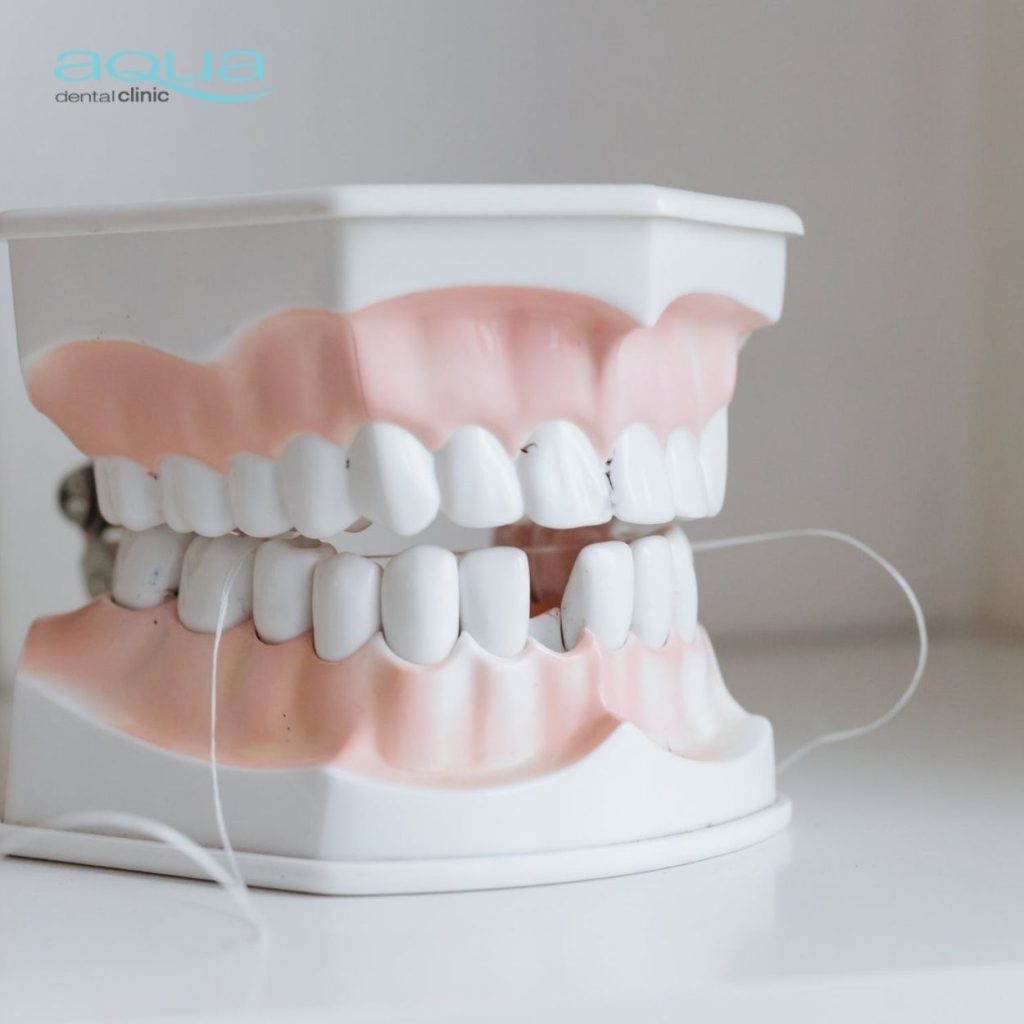
Most people looking into dentures fall into one of two camps. Either they’ve already lost most of their teeth and want to know what actually happens next, or they’re staring down the loss of a few and trying to work out if a denture is even the right call. This page is written for both.
We’re not going to spend the next few thousand words talking you out of dentures so you book an implant consultation instead. Dentures are a genuinely good option for a lot of people, and a bad fit for others. What follows is the honest version: what they’re made of, how they’re fitted, what tends to go wrong, and when something else might serve you better.
One note before we start: if you’re specifically looking for a denture dentist, our dentures page covers appointment details and local specifics. This page is the broader version, useful wherever you’re searching from.
A denture is a removable appliance that replaces missing teeth and the gum tissue around them. It’s not fixed in place like an implant or a crown; it comes out, which is exactly what makes it different from almost every other tooth replacement option on this site.
There are two basic categories, and the difference matters more than the marketing usually lets on. A full (or complete) denture replaces an entire arch, upper or lower, when no natural teeth remain in that jaw. A partial denture fills in gaps while your remaining natural teeth stay put, usually held in place with metal clasps or a precision attachment that clips onto nearby teeth.
Neither type is inherently better. Which one you need is decided by how many teeth you’ve lost and where, not by preference.
Complete dentures sit directly on the gum ridge, held in place by suction and the natural shape of your mouth (denture adhesive helps, especially early on). They’re made after any remaining teeth in that arch have been removed and the gums have had time to heal.
Partial dentures work differently. They clip onto your existing teeth, which do most of the work of keeping the denture stable. This is usually the less invasive option when you’ve only lost a handful of teeth, and it doesn’t touch the teeth you still have beyond the clasp points.
Immediate dentures are fitted on the same day your teeth are extracted, so you’re never left without teeth while your gums heal. The trade-off is that your gums will keep changing shape over the following months, so an immediate denture almost always needs relining or replacing once healing is complete. Think of it as a bridge to the “real” denture rather than the final result.
Implant-retained and implant-supported dentures clip onto or sit on top of a small number of implants rather than relying purely on suction or clasps. They’re still removable, but far more stable than a conventional denture, and they’re usually the step people take when a standard denture keeps moving around no matter how well it’s fitted. If that sounds like where you’re heading, our All-on-4 page covers the fixed, non-removable alternative in detail.
Acrylic is the most common material, mainly because it’s straightforward to adjust or repair. It’s less durable than the alternatives below, and it can pick up stains over time if it isn’t cleaned properly.
Chrome cobalt (metal) frameworks are thinner and stronger than acrylic, which means a partial denture built on a metal base can be smaller and less bulky in the mouth. They’re not usually suitable for a complete denture with no teeth left to clasp onto.
Flexible dentures, made from a nylon-based resin, bend slightly with the movements of your mouth and have no visible metal clasps, which some patients prefer for the way they look. They’re a good option for smaller gaps, though they generally aren’t the first choice for larger or complete dentures.
None of these materials is universally “best.” The right one depends on how many teeth you’re replacing and what you can’t stand the look or feel of. We’ll talk through the trade-offs properly at your consultation rather than assuming one material suits everyone.
1. Consultation and assessment. Your dentist checks your remaining teeth, gums, and jawbone, and talks through whether a full or partial denture (or something else entirely) fits your situation.
2. Extractions, if needed. If teeth still need to come out, that happens first. Gums typically need several weeks to heal before a permanent denture can be accurately fitted, which is where immediate dentures come in if you don’t want a gap in the meantime.
3. Impressions and try-in. Once healing is done (or immediately, for immediate dentures), an impression of your mouth is taken and used to build a wax or plastic try-in version. This is your chance to check the fit, bite, and appearance before anything is finalised.
4. Fitting. The finished denture is fitted, checked for comfortable bite and stability, and adjusted on the spot if anything feels off.
5. Follow-up adjustments. Almost everyone needs at least one follow-up appointment in the first few weeks. Gums settle, sore spots show up, and small tweaks make a real difference to comfort.
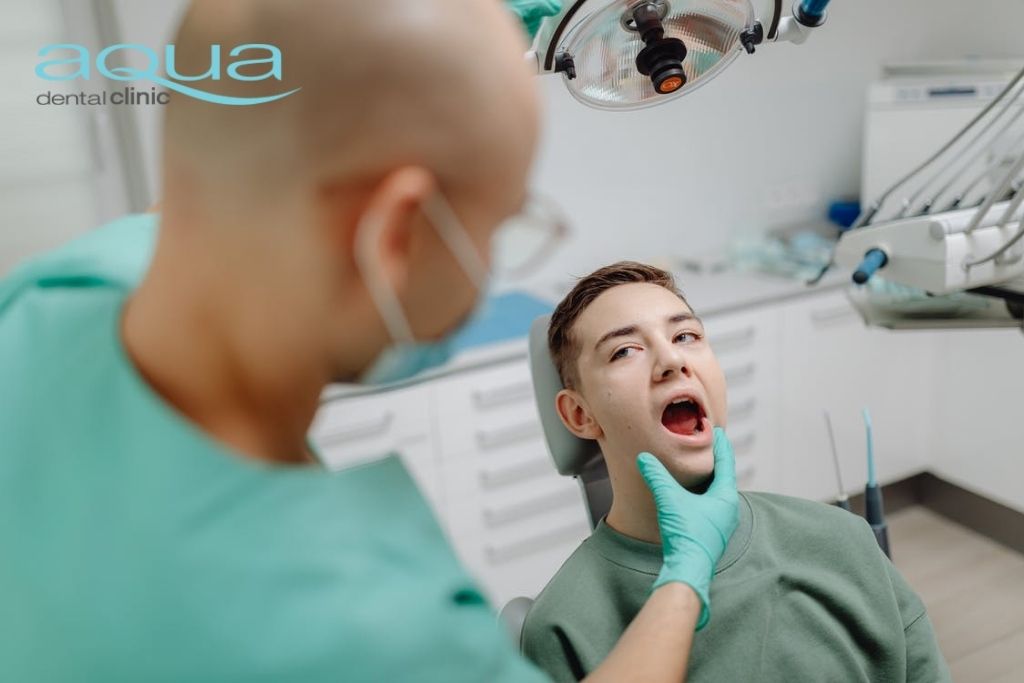
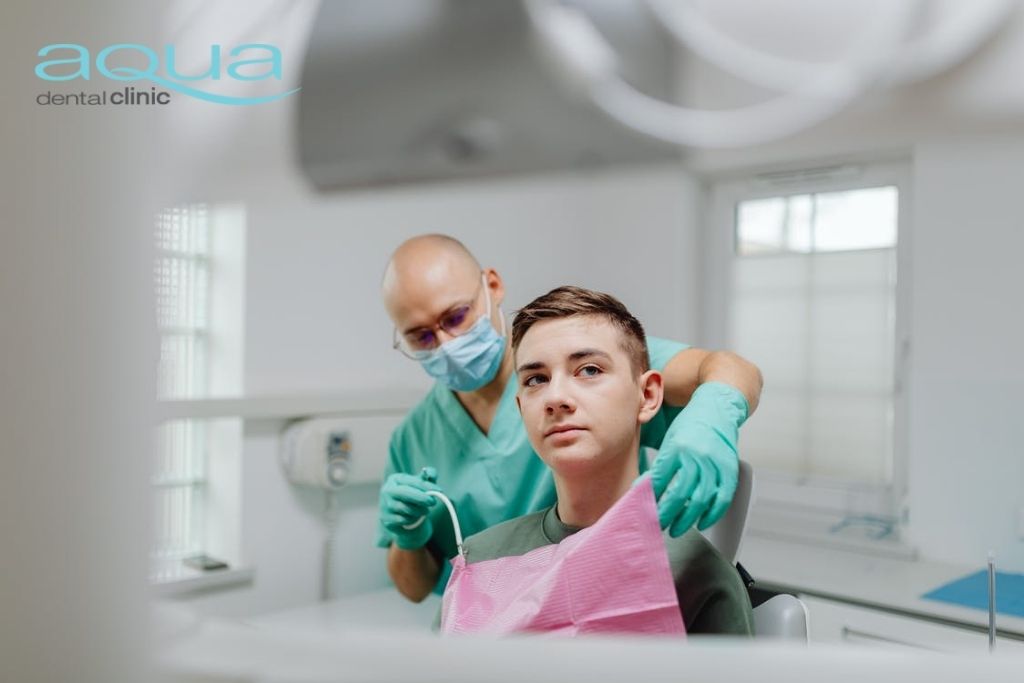
Nobody puts in a new denture and forgets it’s there by lunchtime, whatever the adverts imply. The first few weeks involve a genuine adjustment period, and it’s worth knowing what’s normal so you’re not alarmed by it.
Speech often sounds slightly different at first, particularly with an upper denture, since it changes the space your tongue is used to working with. Reading out loud for a few minutes a day is a surprisingly effective way to speed this up.
Eating takes practice too. Start with soft, bite-sized food cut small, chew evenly on both sides of your mouth rather than favouring one, and build up to tougher foods gradually. Sticky or very hard foods are worth avoiding altogether in the first couple of weeks.
Sore spots are common as your gums adjust to the pressure of a new denture, and that’s exactly what your follow-up appointments are for. Don’t just live with discomfort and hope it settles. A quick adjustment usually fixes it in minutes.
Dentures need daily cleaning, just like natural teeth do, though the method is different. Brush them every day with a soft brush and a non-abrasive denture cleaner rather than regular toothpaste, which can be too harsh and leave micro-scratches where bacteria collect.
Most dentures also need to soak overnight in a denture-cleaning solution or plain water, since letting them dry out can cause warping that throws off the fit. Whatever you do, don’t use boiling water; it will distort the shape permanently.
Even with a denture in, your gums, tongue, and any remaining natural teeth still need attention. Brush your gums gently and keep up with regular dental check-ups, since your mouth keeps changing shape over time even after your teeth are gone, and a denture that fit perfectly last year might not fit as well today.
A well-made, well-cared-for denture typically lasts several years, though it varies by patient. The material wears down, and more importantly, the shape of your jawbone and gums changes gradually after tooth loss, a process called resorption. Your denture doesn’t change shape to match; your mouth does, which is why a denture that fit perfectly on day one can start to feel loose or rock slightly further down the line.
This is also why relining (adding new material to the inside of the denture to match your current gum shape) is a normal part of owning dentures long-term, not a sign that something went wrong with the original fit. Most people need at least one reline over the life of a denture, sometimes more.
If you find yourself needing relines more and more often, or your denture never quite settles no matter how many adjustments you make, that’s usually the point worth raising the implant-retained option, which anchors to something that doesn’t shrink the way your gum ridge does.
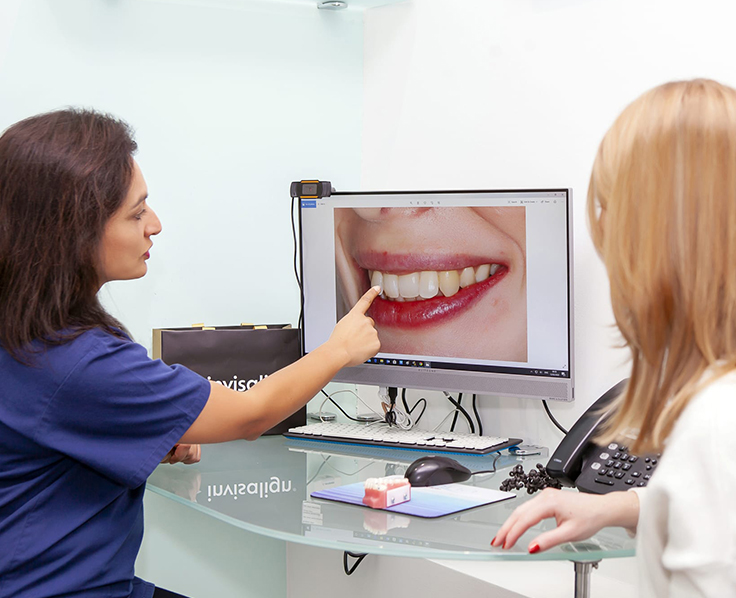
Dentures and implants solve the same problem in fundamentally different ways, and there’s no universally correct answer between them. It depends on your bone health, your budget, and what trade-offs you’re willing to live with.
Dentures are removable, implants are fixed. That’s the headline difference. A denture comes out for cleaning and, for many people, overnight. An implant (or an implant-supported bridge like All-on-4) stays in your mouth permanently, brushed and cared for the same way as natural teeth.
Dentures don’t stop bone loss. Implants do. This is the part that doesn’t get mentioned enough. Your jawbone needs the pressure of tooth roots to keep its shape and density. A denture sits on top of the gum and provides no such stimulation, so the bone underneath continues to shrink slowly over the years, which is part of why dentures need periodic relining. An implant replaces the root itself and helps preserve the bone around it. Our guide on dental implants vs dental bridges covers this mechanism in more depth if you want the full picture.
Cost runs the other way. Dentures are generally the lower-cost option upfront, which genuinely matters and isn’t something to wave away. Implants and implant-supported options like All-on-4 represent a bigger initial investment, even though they can work out more cost-effective over time once you factor in repeated denture relines and replacements. See our dental fees page for exact figures on both.
Bone volume affects your options. Some patients who’d prefer implants simply don’t have enough bone left to support them without additional procedures. If that’s you, ask about bone grafting for dental implants, since it’s often more achievable than people assume, though it does add time to the process.
Plenty of people are perfectly happy with well-made, well-fitted dentures for the rest of their lives. Others reach a point where the maintenance and movement become too much and make the switch. Neither path is the “correct” one in the abstract. It’s genuinely about what suits your situation.
Denture fees at Aqua Dental Clinic start from £850 per arch. What you pay beyond that starting point depends on the material you choose, whether it’s a full or partial denture, and the complexity of your individual case, so we’d rather point you to an accurate figure than guess at one here.
We offer 0% finance and our payment plans and membership plans may also apply depending on your situation. Full current pricing is listed on our dental fees page, and if you’re weighing dentures against an implant-supported option, that same page lists implant pricing for a direct comparison. The only way to get an exact number for your case is a proper assessment.
Every denture page online will tell you about the upsides. Here’s the part that’s just as important:
None of this means dentures are the wrong choice. It means going in with realistic expectations, which tends to make people far happier with the result than going in expecting a fixed-tooth experience from a removable appliance.
Fit is everything with a denture. A denture that’s technically well made but poorly fitted to your specific mouth will move, rub, and eventually sit in a drawer, which is exactly the outcome we’re trying to avoid. Every denture we fit starts with a proper assessment of your gums, bite, and remaining teeth, not a one-size-fits-most approach.
We also won’t quietly push you toward implants if a denture genuinely serves you better, or the other way round. If an implant-retained option would solve a specific problem you’re having, we’ll say so, and if it wouldn’t, we’ll say that too. You can see the kind of planning technology behind that on our technology page, and get a feel for real results on our smile gallery and patient testimonials.
If dentures are part of a wider smile concern, whether that’s alignment, staining on remaining teeth, or a chipped tooth alongside missing ones, our cosmetic dentistry page and veneers page cover the options that often come up alongside denture treatment. And if dental anxiety is part of what’s kept you from sorting this out, our nervous patients page explains how we handle that, without the usual empty reassurances.
New to the practice? Our new patients page walks through what your first visit actually looks like, and meet the team if you’d like to know who you’ll be seeing.

Struggling with an existing denture that never quite settled, or trying to decide between a denture, a bridge, and an implant before you commit to anything? A proper assessment of your gums, bite, and remaining teeth will tell you far more than any general guide can. Talk to us before assuming discomfort or movement is just something you have to live with.
Brush them daily with a soft brush and a non-abrasive denture cleaner, and soak them overnight in a denture solution or plain water so they don’t dry out and warp. Keep brushing your gums and any remaining natural teeth too, and stick with regular dental check-ups.
You can, but most dentists recommend taking them out overnight to give your gums a rest and reduce the risk of irritation or infection. If you do sleep in them occasionally, make sure they’re properly cleaned first.
Mostly, yes, once you’ve adjusted. Start with soft foods cut into small pieces, chew evenly on both sides, and build up to firmer foods over a few weeks. Very sticky or hard foods are worth avoiding even once you’re settled in.
New dentures often cause some soreness while your gums adjust, particularly in the first few weeks. That’s normal and usually resolved with a quick adjustment appointment. Ongoing pain isn’t something to just live with; it means the fit needs checking.
Most people adapt within a few weeks, though speech and eating confidence can take a bit longer. Reading aloud and practising with soft foods both help speed up the process.
Often, yes, particularly acrylic dentures, which can usually be repaired rather than replaced entirely if the damage is minor. Don’t attempt a DIY fix with glue from a hardware shop; it can make repairs harder and isn’t safe for something that sits in your mouth.
Yes, NHS dentures are available and fall under Band 3 treatment, though the range of materials and finishes is more limited than what’s available privately. We can talk through both routes at a consultation.
A standard denture rests on the gum and stays in place through suction or clasps on nearby teeth. An implant-retained denture clips onto a small number of implants, giving it far more stability, though it’s still removable for cleaning, unlike a fixed option such as All-on-4.
Not necessarily. A single missing tooth is often better replaced with a bridge or a single implant rather than a partial denture, since either avoids the need for clasps on your other teeth. We’d talk through what makes sense for your specific gap at a consultation.